
By Flavia Oyuu, Communications Office, Lira Diocese
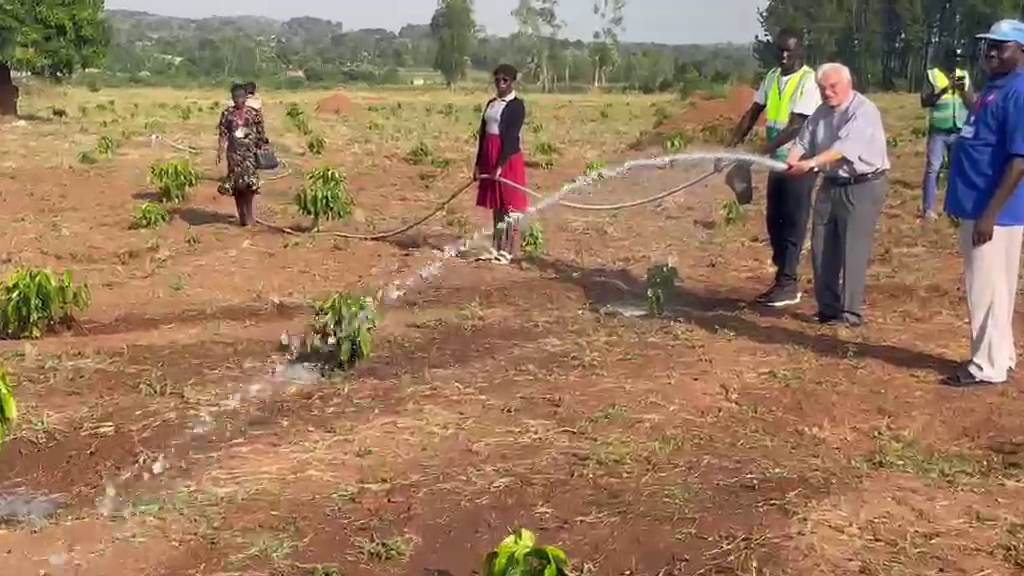
NGETTA, LIRA DIOCESE – Lira Diocese has commissioned a solar-powered irrigation project at Ngetta aimed at enhancing agricultural production and ensuring a reliable water supply for diocesan institutions, in a move that underscores the Church’s commitment to sustainable development and self-reliance.
The project, sponsored by Bishop Emeritus Giuseppe Franzelli through the support of friends and benefactors from Italy, was implemented under the leadership of Fr. Polycarp Opio, Vicar for the Clergy of Lira Diocese, and Fr. Emmanuel Opio, Chancellor of the Diocese.
The irrigation system is expected to support the diocesan coffee and cocoa farm while also providing water to the students’ hostel at Uganda Martyrs University, Ngetta Campus.
Speaking during the blessing and commissioning of the project, Bishop Emeritus Franzelli described the initiative as a practical expression of faith through action and a demonstration that local communities can actively invest in their own development.
“This project is a sign and proof that our people and our Diocese can do something for themselves. We should not simply wait for assistance from outside, but invest in initiatives that can bear fruit and have a lasting impact,” he said.
The retired bishop expressed gratitude to all those who contributed to the realization of the project and prayed that the irrigation system would become a source of life, growth and development for the people of the Diocese.
“I ask God to bless this enterprise and make it a source of life, water, progress, growth and development for our people,” Bishop Franzelli added.
Fr. Desiderius Pule, Director of Caritas Lira and manager of the diocesan farm, said the project comes at a critical time as the Diocese seeks to safeguard its agricultural investments against the effects of prolonged dry spells.
He noted that the irrigation system will support approximately 27 acres of coffee plantations, comprising both established coffee gardens and newly planted seedlings.
“This represents a significant investment by the Diocese. The irrigation system and water pump will play a critical role in sustaining these plantations and supporting our long-term agricultural and development goals,” Fr. Pule said.
The project engineer, Mr. Obong Isaac, commended the Diocese and Caritas Lira for their trust and collaboration throughout the implementation process. He described the installation as a dual-purpose project designed to serve both the diocesan farm and the hostel facilities.
The commissioning of the irrigation scheme reflects Lira Diocese’s broader commitment to integrating pastoral ministry with practical development initiatives aimed at improving livelihoods, promoting environmental resilience and strengthening institutional sustainability.
Church leaders expressed hope that similar initiatives can be replicated across the Diocese to support communities facing the challenges of climate change and increasingly unpredictable rainfall patterns.
End
Recent Comments