
By Fr. Isaac Ojok, Communications Office, Lira Diocese
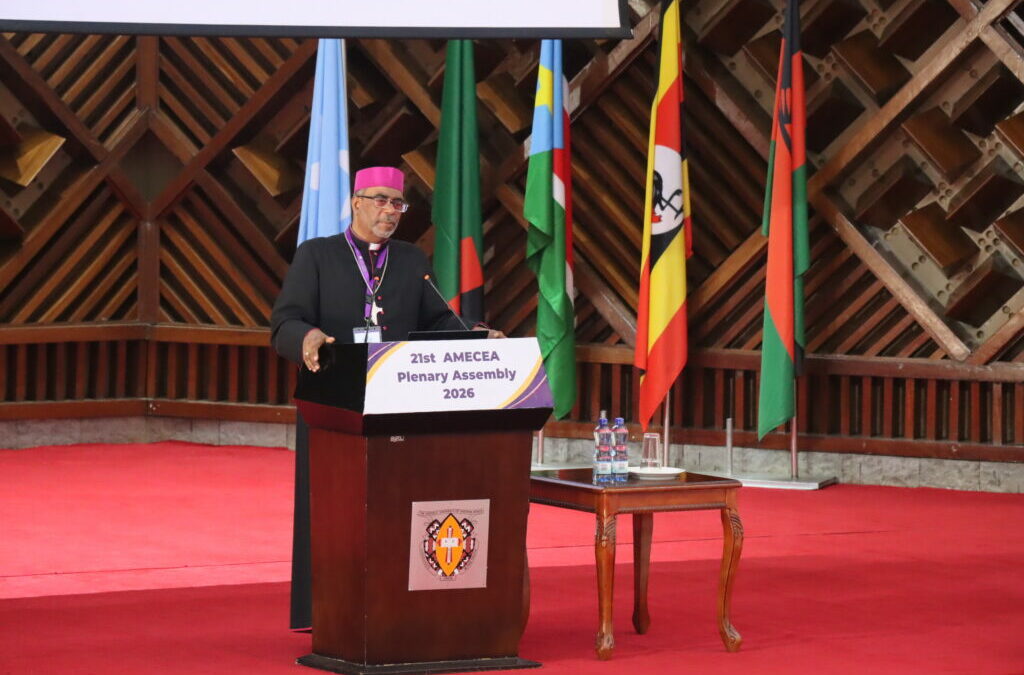
The Metropolitan Archbishop-elect of Addis Ababa, Ethiopia, Most Rev. Tesfaye Tadesse Gebresilasie, has outlined key insights on young people drawn from the Final Document of the Synod on Synodality during the ongoing 21st AMECEA Plenary Assembly in Nairobi.
Addressing the delegates on Tuesday, July 21, Archbishop Tesfaye, a member of the Comboni Missionaries of the Heart of Jesus (MCCJ), reflected on four key lessons from the synodal journey: about young people, directions for youth ministry after the synod, and the pastoral responsibility of bishops in accompanying young people.
Synodality: A Continuing Journey
The Archbishop-elect emphasized that synodality is deeply rooted in the tradition of the early Church, citing Acts 15 as an example of the first synodal experience. He noted that the current synodal journey is a continuation of this heritage.
He recalled that Pope Francis, while marking 50 years since the institution of the Synod of Bishops by St. Paul VI, stressed that synodality is not optional but essential to the Church’s life. With 2026 dedicated to receiving the final synodal document, Archbishop Tesfaye urged local Churches to actively embrace and implement its vision.
He further described synodality as a journey rather than a destination, serving the Church’s mission of evangelization. Guided by the Holy Spirit, the synodal process calls for ongoing consultation, discernment, and concrete action at the local level.
Synodality as Conversion
The Comboni Archbishop underscored that synodality requires a spiritual conversion that shapes the daily life of the Church. This transformation, he said, involves all members of the Church, bishops, priests, religious, and the laity, learning to live and act in a more synodal way.
He encouraged local Churches within AMECEA to continue fostering structures and pathways that promote participation, dialogue, and shared responsibility.
Young People at the Heart of Renewal
Turning to the place of young people in the synodal process, the Archbishop noted that while the synod was not exclusively about youth, it recognizes them as both vulnerable and vital contributors to the Church’s renewal.
He highlighted that young people bring a strong sense of community and are active participants in the life of the Church. The document calls for their meaningful inclusion in decision-making bodies such as parish pastoral councils and diocesan structures not merely as observers, but as contributors to discernment.
The Archbishop also pointed to the growing role of families and institutions in supporting young people, emphasizing the importance of intergenerational dialogue and collaboration.
A Synodal Approach to Youth Ministry
The Ethiopian Prelate stressed that youth ministry must itself be synodal, rooted in listening, accompaniment, and shared journeying. He called for renewed methods and language that resonate with contemporary youth culture, noting that some traditional approaches are no longer effective.
He emphasized the need to spend time with young people, listen to their experiences, and recognize the action of the Holy Spirit in their lives. He said young people are not just recipients but agents of youth ministry.
Pastoral Responsibility of Bishops
On the role of bishops, Archbishop Tesfaye highlighted the growing need for authentic relationships among young people, many of whom are increasingly drawn into virtual interactions at the expense of real human connection.
He called for a “conversion in relationships,” beginning within families and extending to Church communities. Bishops, he said, must be visible signs of hope, inspiring young people to believe in the possibility of change.
The Archbishop also drew attention to the challenges faced by youth, including various forms of abuse, emotional, spiritual, political, and social and urged Church leaders to be prepared to address these realities with compassion and competence.
Call for Coordinated Action
The synodal document, he noted, calls for stronger coordination among diocesan structures, religious congregations, and Church movements working with young people. Bishops are tasked with fostering unity and collaboration to ensure a coherent pastoral approach.
He further highlighted the need for establishing or strengthening youth offices at the diocesan level and promoting synodal formation in seminaries and among candidates for consecrated life.
Navigating the Digital Age
Addressing emerging challenges, Archbishop Tesfaye warned of the risks associated with the unchecked use of artificial intelligence and digital technologies among young people. He called for clear guidelines and formation to help them engage responsibly with these tools.
A Question for the Church
Concluding his reflection, the Archbishop echoed a central question raised by the synod: How can the Church ensure that young people fully participate in its life and mission?
He urged Church leaders across AMECEA to take concrete steps in making the Church a more inclusive, participatory, and hope-filled community for the younger generation.
End
Recent Comments