
By Flavia Oyuu, Communications Office, Lira Diocese
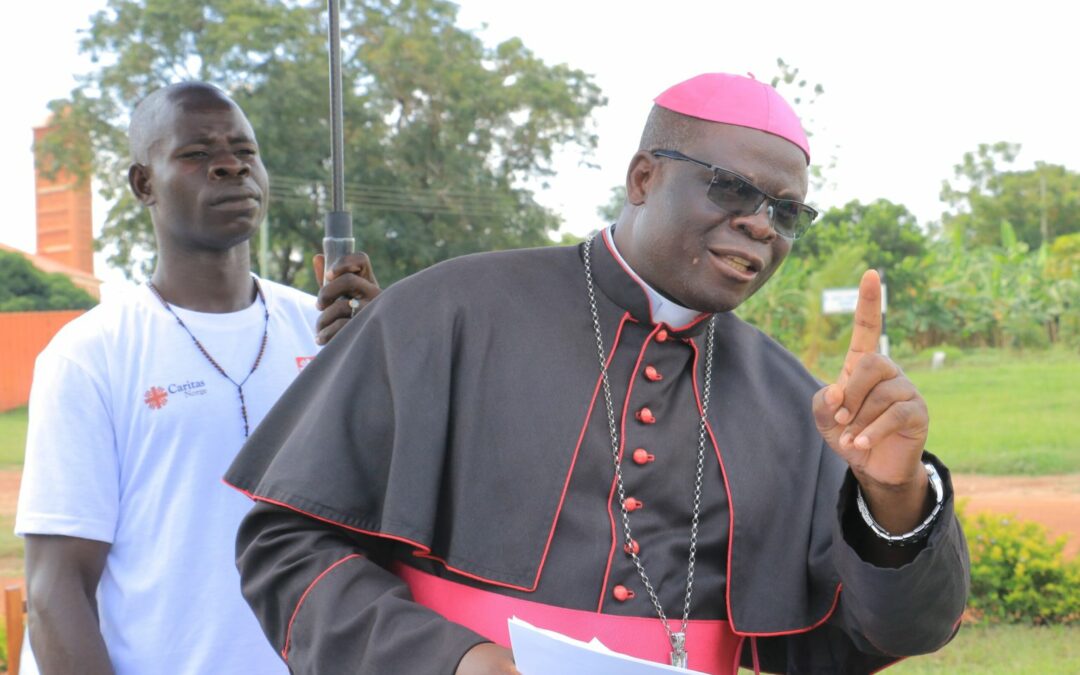
At the beginning of the Lenten season, the Bishop of Roman Catholic Diocese of Lira, Sanctus Lino Wanok, has called on Catholics to deeply reflect on the three pillars of Lent: prayer, fasting, and almsgiving.
While leading the first Mass of Lent at Uganda Martyrs Cathedral this morning, Bishop Wanok urged Christians to focus not merely on performing these acts, but on the intention behind them. He emphasized that Jesus teaches believers not to perform righteous deeds to be seen by others, not to pray to impress, and not to fast in order to appear holy.
“The danger is not in doing well,” he noted, “but in turning good deeds into performances.” He described Lent not as a form of spiritual theater, but as an expression of hidden love rooted in sincerity and humility.
The Bishop encouraged the faithful to use this season as a time of honest self-examination, posing reflective questions: Where is my heart divided? What needs to be torn away? What attachments are weakening my love for God? Where do I need reconciliation?
He further explained that each of the three pillars of Lent serves a deeper spiritual purpose. Fasting weakens attachment to comfort, almsgiving reduces attachment to possessions, and prayer diminishes reliance on self-sufficiency. Together, he said, they create space for God in one’s life.
Bishop Wanok reminded the congregation that while the ashes received on Ash Wednesday will eventually fade, the grace of the Lenten season can leave a lasting spiritual mark. He stressed that Lent is not about gloominess, but about freedom, freedom from sin, pride, and anything that hinders wholehearted love for God.
“We begin in humility, as dust, but we journey toward Easter and the promise of resurrection,” he said. “Today we acknowledge who we are, and we remember whose we are.”
As the Lenten season begins, Bishop Wanok’s message calls on the faithful to move beyond outward observance and embrace genuine interior transformation. Through sincere prayer, sacrificial fasting, and generous almsgiving, Christians are invited to prepare their hearts for Easter with humility, freedom, and renewed devotion.
In Lira Urban West Archdeaconry in the Diocese of Lango, the Archdeacon Rev. Canon Dr. Jacky Otto Olima, has urged Christians to use the Lenten season as a time for reconciliation and restoring broken relationships through forgiveness.
Speaking to the media, Rev. Canon Dr. Olima encouraged believers to forgive those who may have wronged or offended them in the past, emphasizing that Lent is a period of reflection, healing, and spiritual renewal.
He noted that the recent political elections left many people hurt, heartbroken, oppressed, and disappointed. According to him, such emotional and social tensions have contributed to increased sin in the Lango sub-region, including murder and other forms of injustice.
Rev. Canon Dr. Olima further revealed that the church will dedicate this Lenten season to three key petitions before God, including prayers for unity in the aftermath of the political period and a renewed call for forgiveness among the faithful.
The Archdeacon emphasized that true observance of Lent goes beyond fasting and prayer, calling on Christians to actively pursue peace and reconciliation. He urged the community to embrace forgiveness and unity as essential steps toward healing divisions and fostering harmony within society.
Meanwhile, the District Khadi of the Lango Muslim Supreme Council, Sheikh Ibrahim Okello, has called on Muslim communities to faithfully observe the holy month of Ramadan by fasting from pre-dawn to sunset and dedicating more time to prayer and reading the Holy Qur’an.
Speaking to the media, Sheikh Okello emphasized that Ramadan is not only about abstaining from food and drink, but also about spiritual and physical discipline. He encouraged Muslims to use the sacred period to strengthen their faith and avoid negative behaviors such as gossiping, backbiting, lying, and engaging in unnecessary arguments.
He described Ramadan as a time of deep spiritual renewal and heightened devotion, where believers are given an opportunity to draw closer to Allah through prayer, reflection, and good deeds.
However, Sheikh Okello clarified those certain vulnerable groups including pregnant and breastfeeding women, the sick, the elderly and young children are exempt from fasting, in accordance with Islamic teachings.
Sheikh Okello urged the faithful to make meaningful use of the holy month by nurturing discipline, compassion, and self-control. He noted that when observed with sincerity and commitment, Ramadan becomes a powerful period of transformation for both individuals and the wider community.
Recent Comments